

Disclosure: This article may contain affiliate links. If you click on a link and make a purchase, we may earn a commission at no additional cost to you. This helps support our work and allows us to continue providing in-depth reviews and comparisons.
Marketing teams are drowning in copy requests. Between ad campaigns, email sequences, landing pages, and social media posts, the demand for high-converting copy has never been higher. And here’s the thing: AI copywriting tools have evolved way beyond simple content generators.
We’re now seeing platforms that don’t just write copy. They optimize for conversions, adapt to your brand voice, and integrate directly with your ad platforms. Some can even manage entire campaigns with minimal human oversight.
Why Marketers Need AI Copywriting Tools Now
The pressure on marketing teams has reached a breaking point. You’re expected to produce personalized copy for multiple channels, test dozens of variations, and maintain consistent brand voice across everything. Oh, and do it all faster than last quarter.
Traditional copywriting workflows can’t keep up. A single landing page might need 10 headline variations for A/B testing. Your email campaign needs personalized subject lines for different segments. Your ad campaigns require platform-specific copy for Facebook, Google, LinkedIn, and TikTok.
That’s where AI copywriting tools come in. They handle the volume while you focus on strategy and creative direction. The best platforms can generate hundreds of variations in minutes, each optimized for specific channels and audiences.
What Makes a Copywriting AI Tool ‘Best’ in 2026
Not all AI copywriting tools are created equal. After testing dozens of platforms, I’ve found that the best ones share several key characteristics:
- Conversion optimization: The tool should generate copy that actually converts, not just sounds good
- Multi-channel support: One platform should handle ads, emails, landing pages, and social media
- Brand voice consistency: The AI needs to learn and maintain your specific tone and style
- Integration capabilities: Direct connections to ad platforms, CRMs, and marketing automation tools
- Performance tracking: Built-in analytics to measure what’s working and what’s not
The platforms that excel in these areas typically deliver measurable ROI within the first month. The ones that don’t? They’re just expensive content generators.
How We Selected These Tools
I didn’t just compile a list based on marketing hype. Each tool on this list was evaluated through hands-on testing, user feedback from marketing teams, and analysis of real conversion data.
We looked at pricing transparency, ease of onboarding, quality of generated copy, and most importantly, whether the copy actually performed in live campaigns. Some tools that looked impressive in demos didn’t make the cut because their output was too generic or their pricing was prohibitively expensive for small teams.
The 10 Best AI Tools for Copywriting in 2026
Here’s the comprehensive breakdown of platforms that are actually moving the needle for marketing teams right now. Each tool has specific strengths, and your best choice depends on your primary use case and budget.
Jasper: Best Overall for High-Converting Ad Copy
Jasper has evolved significantly from its early days as a basic content generator. The platform now offers sophisticated ad copy optimization with templates specifically designed for different ad platforms and objectives.
What sets Jasper apart is its Brand Voice feature. You can train the AI on your existing copy, style guides, and brand documents. The result? Copy that actually sounds like your brand, not generic AI output.
The platform includes templates for Google Ads, Facebook ads, LinkedIn campaigns, and more. Each template is optimized for the specific character limits and best practices of that platform. You’re not just getting copy; you’re getting copy that fits the format.
Best for: Marketing teams and agencies that need high-volume ad copy across multiple platforms with consistent brand voice.
Copy.ai: Best for Multi-Channel Campaign Copy
Copy.ai excels at creating coordinated copy across different marketing channels. Their workflow tools let you generate an entire campaign’s worth of copy in one session, from email subject lines to social media posts to landing page headlines.
The platform’s strength is its campaign-level thinking. Instead of generating individual pieces of copy in isolation, Copy.ai helps you maintain message consistency across touchpoints. This is particularly valuable for product launches or seasonal campaigns where you need coordinated messaging.
Their A/B testing features are solid too. You can generate multiple variations of any copy element and the platform will suggest which versions might perform better based on historical data.
Best for: Marketing teams running integrated campaigns across email, social, and paid channels who need message consistency.
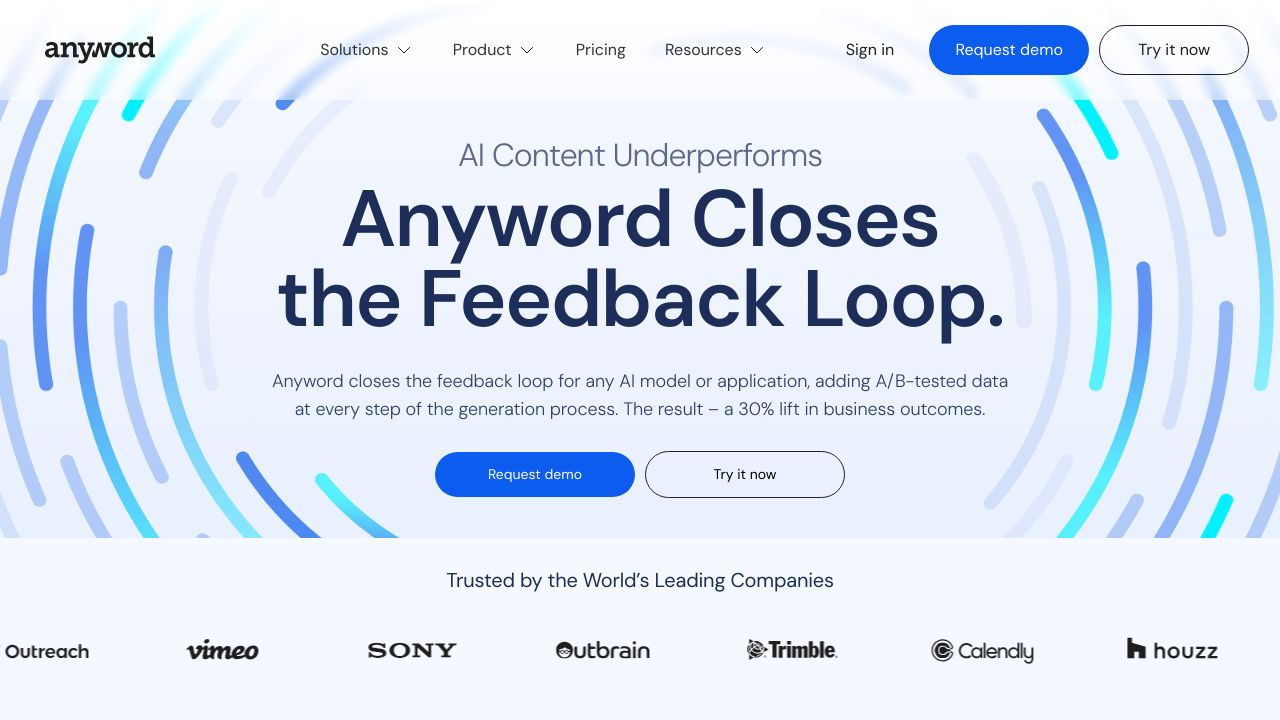
Anyword: Best for E-commerce Product Descriptions
Anyword has built something special for e-commerce teams. Their product description generator doesn’t just write generic copy. It analyzes your product attributes, target audience, and competitive positioning to create descriptions that actually sell.
The platform includes bulk generation capabilities, which is essential if you’re managing hundreds or thousands of SKUs. You can upload a product feed and generate optimized descriptions at scale, each one unique and SEO-friendly.
What really stands out is their predictive performance scoring. Before you publish any copy, Anyword shows you a predicted conversion score based on analysis of millions of marketing messages. It’s not perfect, but it’s surprisingly accurate.
Best for: E-commerce brands and online retailers who need to generate product descriptions at scale while maintaining quality.
Phrasee: Best for Email Marketing Campaigns
Phrasee specializes in email marketing copy, and they’ve been doing it longer than most AI copywriting tools have existed. Their platform is built specifically for optimizing email subject lines, preview text, and body copy.
The platform learns from your email performance data over time. As you send campaigns, Phrasee’s AI gets better at predicting what will resonate with your specific audience. This isn’t generic best practices; it’s personalized optimization based on your actual results.
They also offer sequence creation tools for automated email campaigns. You can generate entire welcome series or nurture sequences with consistent messaging and progressive value delivery.
Best for: Email marketing teams and e-commerce brands focused on improving open rates and click-through rates.
Lately: Best for Social Media Ad Text
Lately takes a different approach to social media copy. Instead of starting from scratch, it analyzes your existing content and generates social posts that match your proven messaging.
The platform is particularly strong at creating platform-specific variations. A single piece of content can be transformed into optimized posts for Facebook, Instagram, LinkedIn, and Twitter, each one adapted to that platform’s best practices and character limits.
For paid social campaigns, Lately generates ad copy variations that maintain your brand voice while testing different angles and hooks. The platform tracks which variations perform best and learns from that data.
Best for: Social media managers and paid social teams running campaigns across multiple platforms.
Writesonic: Best for Landing Page Copy
Writesonic has developed strong capabilities for long-form sales copy and landing pages. Their landing page builder combines AI copywriting with design templates, letting you create complete pages quickly.
The platform includes specific templates for different landing page types: lead generation, product launches, webinar registrations, and more. Each template follows proven conversion optimization principles.
Their headline generator is particularly useful. You can generate dozens of headline variations and the platform will score them based on emotional impact, clarity, and conversion potential.
Best for: Marketing teams and agencies that need to create high-converting landing pages quickly.
Rytr: Best Budget Option for Small Agencies
Rytr offers solid AI copywriting capabilities at a fraction of the cost of premium platforms. While it doesn’t have all the advanced features of higher-priced tools, it covers the essentials well.
The platform includes templates for ads, emails, blog posts, and social media. The quality is generally good, though you’ll probably need to do more editing than with premium tools.
For small agencies or freelancers just getting started with AI copywriting, Rytr provides excellent value. You can test the waters without committing to expensive subscriptions.
Best for: Freelancers, small agencies, and startups with limited budgets who still need AI copywriting capabilities.
Writer: Best for Brand Voice Consistency
Writer is built for enterprise teams that need strict brand voice control. The platform lets you create detailed style guides, terminology databases, and brand voice profiles that the AI follows religiously.
What makes Writer special is its governance features. You can set up approval workflows, enforce brand guidelines automatically, and ensure that every piece of copy meets your standards before it goes live.
The platform also includes collaboration tools for larger teams. Multiple people can work on copy simultaneously, with version control and commenting features.
Best for: Enterprise marketing teams and large agencies that need strict brand voice control across multiple team members.
Frase: Best for SEO-Optimized Copy
Frase combines AI copywriting with SEO research and optimization. The platform analyzes top-ranking content for your target keywords and helps you create copy that’s optimized for search.
While Frase is often used for blog content, it’s also valuable for creating SEO-optimized landing pages and product descriptions. The platform shows you which keywords and topics to include for better organic visibility.
Their content brief feature is particularly useful. It analyzes competitor content and creates a detailed outline of what your copy should cover to rank well.
Best for: Marketing teams focused on organic traffic who need copy that ranks well in search engines.
Persado: Best for Performance Max and Automated Campaigns
Persado is an enterprise-level platform that integrates directly with automated campaign systems like Google’s Performance Max. The platform generates dynamic copy that adapts based on audience signals and performance data.
What sets Persado apart is its focus on emotional language and psychological triggers. The AI doesn’t just write copy; it analyzes which emotional appeals work best for different audience segments.
The platform’s integration with major ad platforms means your copy can be automatically optimized and updated based on real-time performance. This is particularly valuable for large-scale campaigns where manual optimization isn’t practical.
Best for: Enterprise brands running large-scale automated campaigns across multiple channels.
Feature Comparison: What Each Tool Does Best
Choosing between these platforms isn’t always straightforward. Each one has specific strengths, and the right choice depends on your priorities, budget, and use cases.
Pricing and Value Comparison
Pricing varies dramatically across these platforms. Budget options like Rytr start around $9-29 per month, while enterprise platforms like Persado and Writer require custom pricing that can run into thousands monthly.
Mid-tier platforms like Jasper, Copy.ai, and Writesonic typically range from $49-99 per month for individual users, with team plans scaling up based on seats and usage.
When evaluating value, consider your copy volume. If you’re generating hundreds of pieces monthly, even expensive platforms can deliver strong ROI through time savings alone. But if you only need occasional copy, a budget tool might be sufficient.
Integration Capabilities Across Platforms
Integration capabilities separate good tools from great ones. The best AI tools for copywriting connect directly with your existing marketing stack, eliminating manual copy-paste workflows.
Most platforms integrate with popular tools like Google Ads, Facebook Ads Manager, and major email marketing platforms. Enterprise tools like Persado and Writer offer deeper integrations with CRMs like Salesforce and marketing automation platforms like HubSpot.
Some platforms also offer API access, letting you build custom integrations or incorporate AI copywriting into your own tools and workflows.
Conversion Performance Benchmarks
Performance data varies widely depending on industry, audience, and implementation. However, many marketing teams report measurable improvements after implementing AI copywriting tools.
Common improvements include faster copy production (often 3-5x faster than manual writing), increased testing volume (generating 10-20 variations instead of 2-3), and incremental conversion rate improvements through systematic testing.
The biggest gains typically come from increased testing velocity. When you can test more variations quickly, you find winners faster and optimize campaigns more effectively.
Learning Curve and Ease of Use
Some platforms are intuitive from day one, while others require significant onboarding. Budget tools like Rytr and Writesonic are generally straightforward, with simple interfaces and clear templates.
Mid-tier platforms like Jasper and Copy.ai offer more features but maintain reasonable usability. Most teams can become productive within a few days of regular use.
Enterprise platforms like Persado and Writer have steeper learning curves but offer more sophisticated capabilities. These typically require dedicated training and ongoing optimization.
How to Choose the Right AI Copywriting Tool for Your Team
Selecting the right platform isn’t about finding the “best” tool. It’s about finding the best fit for your specific needs, budget, and workflow.
Assessing Your Copywriting Needs and Volume
Start by auditing your current copywriting workload. How many pieces of copy does your team produce monthly? What types (ads, emails, landing pages, social posts)? Which channels drive the most revenue?
If you’re primarily focused on one channel (like email or paid ads), a specialized tool might serve you better than a general-purpose platform. If you need copy across multiple channels, look for tools with strong multi-channel capabilities.
Also consider your testing volume. If you’re running sophisticated A/B tests with dozens of variations, you need a platform that can generate high-quality copy at scale.
Budget Considerations for Different Team Sizes
Budget allocation depends heavily on team size and copy volume. Freelancers and solo marketers can probably get by with budget tools in the $10-30 monthly range.
Small agencies and marketing teams (2-10 people) typically need mid-tier platforms with team collaboration features. Budget $50-200 monthly per active user.
Enterprise teams should expect to invest significantly more, especially if you need advanced features like custom integrations, dedicated support, and sophisticated brand voice controls.
Testing and Trial Strategies
Don’t commit to a platform without testing it first. Most tools offer free trials or freemium tiers. Use them to evaluate quality, ease of use, and fit with your workflow.
During trials, test the platform with real projects, not hypothetical scenarios. Generate copy for actual campaigns and see how it performs. Compare output quality across multiple platforms if possible.
Pay attention to how much editing the AI-generated copy requires. If you’re spending as much time editing as you would writing from scratch, the tool isn’t delivering value.
Integration with Your Existing Marketing Stack
Check integration compatibility before committing. If you’re heavily invested in specific platforms (like HubSpot or Salesforce), make sure your AI copywriting tool connects seamlessly.
Consider your workflow too. Will the AI tool fit naturally into how your team works, or will it require significant process changes? The best tools enhance existing workflows rather than forcing you to adapt to them.
Best Practices for Using AI Copywriting Tools Effectively
Having the right tool is only half the battle. You need to use it effectively to get real results.
Training AI Tools on Your Brand Voice
Most platforms let you train the AI on your brand voice. Take advantage of this. Upload your best-performing copy, style guides, and brand documents. The more examples you provide, the better the AI understands your voice.
Be specific about what you want. Instead of saying “professional tone,” describe exactly what that means for your brand. Include examples of phrases you use and phrases you avoid.
Refine the training over time. As you generate more copy and see what works, update your brand voice profile to reflect those learnings.
The Human-AI Collaboration Workflow
AI shouldn’t replace human copywriters. It should augment them. The best workflow combines AI speed with human creativity and strategic thinking.
Use AI for first drafts and variations. Let it handle the heavy lifting of generating multiple options. Then apply human judgment to select the best options, refine the messaging, and ensure strategic alignment.
Humans are still better at understanding nuance, reading between the lines, and making strategic decisions. AI is better at generating volume and identifying patterns. Play to each strength.
A/B Testing AI-Generated Copy
Never assume AI-generated copy will outperform human-written copy. Test everything. Generate multiple AI variations, compare them against human-written alternatives, and let data decide.
The real power of AI copywriting is testing velocity. You can test 20 variations in the time it would take to manually write 3. This increased testing volume leads to better optimization over time.
Track which types of AI-generated copy perform best. You’ll probably find that AI excels at certain formats (like ad headlines) while humans still win at others (like long-form storytelling).
Avoiding Common AI Copywriting Pitfalls
The biggest mistake is over-relying on AI without human oversight. AI can generate grammatically correct copy that completely misses the mark strategically.
Another common issue is accepting generic output. If the AI generates copy that could work for any brand, it’s not good enough. Push for specificity and differentiation.
Watch out for repetitive patterns too. AI tools sometimes fall into formulaic writing. If you notice the same structures appearing repeatedly, intervene and provide more diverse examples.
Measuring ROI and Performance Metrics
Track time savings as your primary efficiency metric. How much faster can you produce copy with AI assistance? Most teams see 50-70% time reduction once they’re proficient with their chosen tool.
Monitor conversion performance closely. Are AI-generated campaigns performing as well as human-written ones? Better? Worse? This data should inform how you use the tool.
Calculate cost per acquisition for campaigns using AI copy versus traditional copy. The goal isn’t just to produce more copy; it’s to produce more effective copy that drives business results.
Future Trends: What’s Next for AI Copywriting
AI copywriting is evolving rapidly. The tools available today will look primitive compared to what’s coming in the next few years.
Agentic AI and Autonomous Campaign Management
We’re moving toward AI agents that can manage entire campaigns with minimal human intervention. These systems will generate copy, launch campaigns, monitor performance, and optimize automatically.
This doesn’t mean marketers become obsolete. It means we shift from execution to strategy. Instead of writing individual ads, we’ll define campaign objectives and let AI handle the tactical execution.
Hyper-Personalization at Scale
Future AI copywriting tools will generate truly personalized copy for individual users, not just segments. Imagine ad copy that adapts in real-time based on the viewer’s behavior, demographics, and intent signals.
This level of personalization is already technically possible. The challenge is implementing it at scale while maintaining brand consistency and avoiding creepy over-personalization.
Multi-Modal Content Creation
AI copywriting tools are expanding beyond text. We’re seeing platforms that can generate coordinated copy across text, images, video scripts, and audio content.
This multi-modal approach means you’ll be able to create entire campaigns (copy, visuals, and video) from a single brief. The AI will ensure all elements work together cohesively.
Predictive Conversion Optimization
Advanced AI tools are developing predictive capabilities that estimate conversion performance before copy goes live. These systems analyze millions of data points to predict which copy variations will perform best.
While these predictions aren’t perfect, they’re getting more accurate. This means less time wasted on testing variations that were never going to work.
Choosing Your AI Copywriting Partner for 2026
The best AI tools for copywriting aren’t about replacing human creativity. They’re about amplifying it. The right platform helps you produce more copy, test more variations, and optimize faster than ever before.
Quick Selection Guide by Use Case
- Need high-volume ad copy across platforms? Start with Jasper or Copy.ai
- Running an e-commerce store? Anyword’s product description capabilities are hard to beat
- Email marketing is your primary channel? Phrasee specializes in email optimization
- Working with a tight budget? Rytr offers solid capabilities at an affordable price
- Managing a large team with strict brand guidelines? Writer provides the governance features you need
- Focused on organic traffic? Frase combines copywriting with SEO optimization
- Running automated campaigns at scale? Persado integrates with Performance Max and similar platforms
Getting Started: Your First 30 Days
Start with a trial period. Pick 2-3 platforms that seem like good fits and test them with real projects. Don’t just play around; use them for actual campaigns.
Spend the first week learning the platform and training it on your brand voice. Week two, start generating copy for live campaigns. Week three, analyze performance and refine your approach. By week four, you should know whether the tool is worth keeping.
Don’t expect perfection immediately. There’s a learning curve to using these tools effectively. Give yourself time to figure out what works for your specific use cases.
Final Recommendations for Marketers and Copy Teams
AI copywriting tools are most valuable when they enhance human capabilities rather than replace them. Use AI for speed and volume. Use humans for strategy and creativity. The combination is more powerful than either alone.
Start small and scale gradually. Don’t try to AI-ify your entire copywriting operation overnight. Pick one use case, master it, then expand to others.
And remember: the tool matters less than how you use it. A mediocre platform used strategically will outperform the best platform used poorly. Focus on developing effective workflows and processes, not just buying the fanciest tool.