


Disclosure: This article may contain affiliate links. If you click on a link and make a purchase, we may earn a commission at no additional cost to you. This helps support our work and allows us to continue providing in-depth reviews and comparisons.
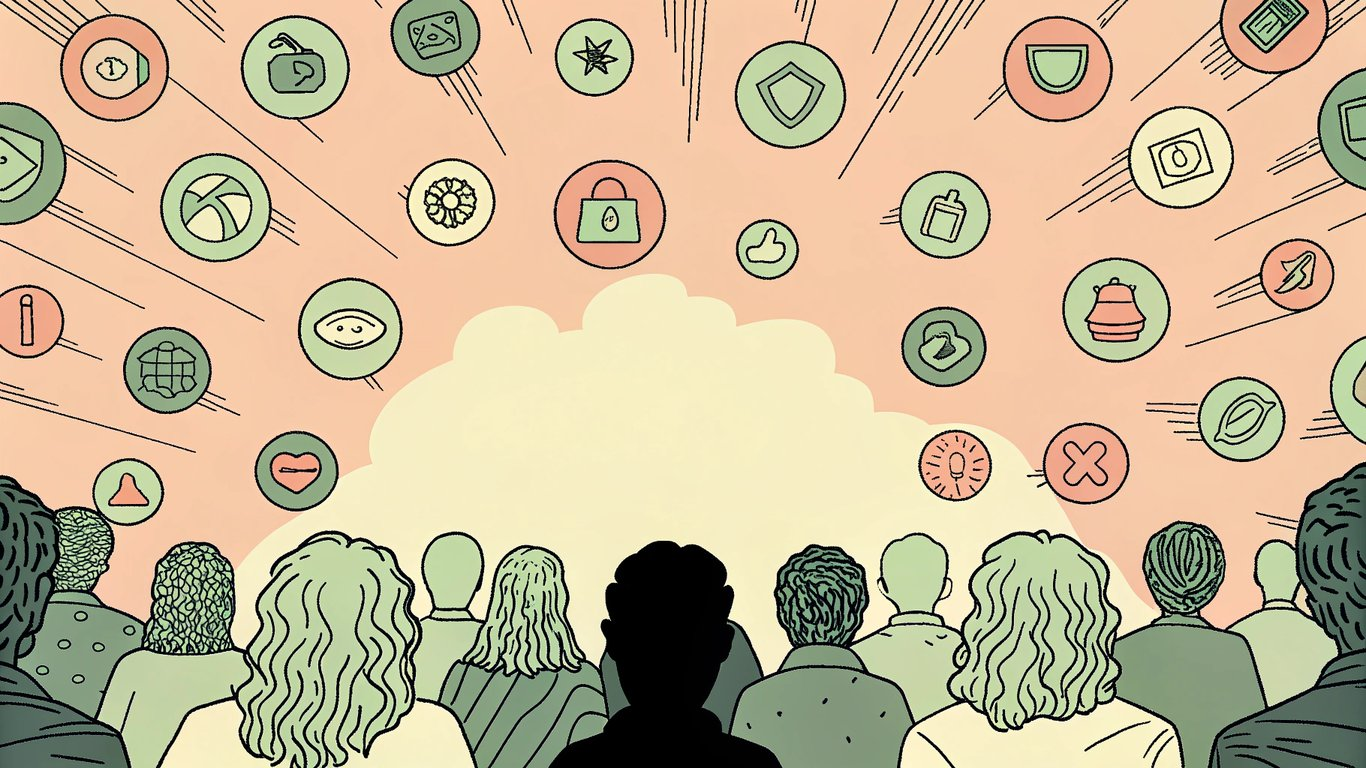
Marketing in 2026 feels like standing in a crowded room where everyone’s shouting about AI. Every platform claims to be AI-powered. Every workflow promises automation. Every customer interaction is supposedly an opportunity for an AI agent to step in.
But here’s the thing: not every AI tool actually improves your marketing performance. Some just add complexity without delivering measurable results.
I’ve spent the past six months testing dozens of AI marketing platforms to figure out which ones actually deliver. This guide cuts through the noise with a ranked list of the Best AI Tools for Marketing based on three critical factors: campaign automation, analytics capabilities, and creative generation.
Why These Three Categories Matter
Campaign automation determines whether you’re spending your time on strategy or manual tasks. Analytics tells you what’s actually working (and what’s burning budget). Creative generation decides if you can keep up with content demands without hiring an army of designers and copywriters.
I weighted these categories based on what marketing teams tell me they need most: 35% for campaign automation, 35% for analytics, and 30% for creative generation. I also factored in pricing, ease of use, and how well each tool plays with your existing marketing stack.
Who Should Read This Guide

This ranking works whether you’re a freelancer managing three clients or an enterprise team coordinating campaigns across 15 markets. The tools vary in complexity and price, but they all solve real marketing problems without requiring a data science degree to operate.
Quick Comparison: Top 10 at a Glance
Here’s how the top 10 AI marketing tools stack up. I’ve included overall scores, starting prices, and what each tool does best.
| Tool | Overall Score | Starting Price | Best For | Team Size |
|---|---|---|---|---|
| HubSpot Marketing Hub | 92/100 | $800/mo | All-in-one automation | SMB to Enterprise |
| Salesforce Marketing Cloud | 90/100 | $1,250/mo | Enterprise analytics | Enterprise |
| Adobe Marketo Engage | 88/100 | $895/mo | B2B automation | Mid to Enterprise |
| Jasper | 86/100 | $49/mo | Content generation | All sizes |
| Copy.ai | 84/100 | $49/mo | Copy at scale | Small to Mid |
| Canva | 82/100 | $15/mo | Visual content | All sizes |
| Semrush | 81/100 | $139/mo | SEO & competitive intel | All sizes |
| Hootsuite | 79/100 | $99/mo | Social management | Small to Mid |
| Mailchimp | 77/100 | $13/mo | Email automation | Small to Mid |
| AdCreative.ai | 75/100 | $29/mo | Ad creative testing | Small to Mid |
Category Winners
Campaign Automation Champion: HubSpot Marketing Hub scored highest with sophisticated workflow builders and multi-channel orchestration that actually works.
Analytics Powerhouse: Salesforce Marketing Cloud dominates with predictive analytics and attribution modeling that enterprise teams rely on.
Creative Generation Leader: Jasper leads the pack for generating marketing copy that doesn’t sound like it came from a robot.
The Top 10 Best AI Tools for Marketing: Detailed Rankings
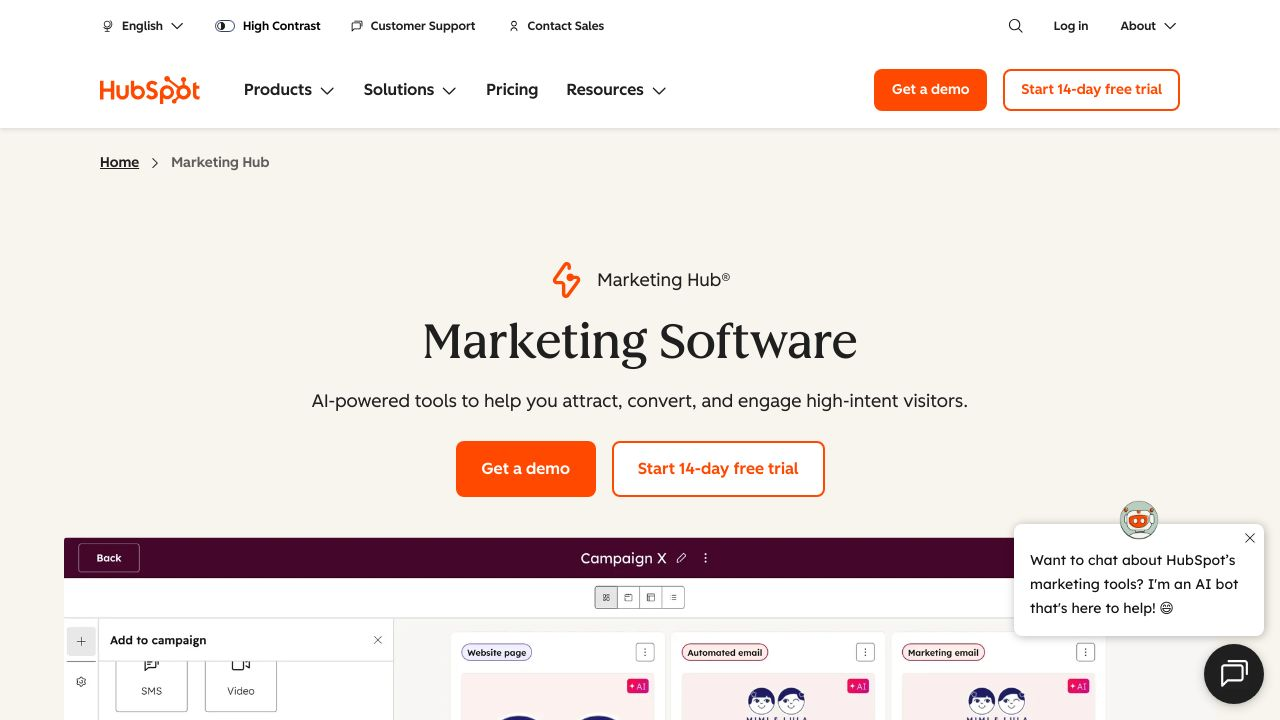
#1: HubSpot Marketing Hub (92/100)
HubSpot takes the top spot because it’s the rare platform that excels across all three categories without feeling like you need a PhD to use it. The AI features integrate naturally into workflows you’re probably already running.
Campaign Automation Score: 33/35 – The workflow builder lets you create complex, multi-touch campaigns with conditional logic that actually makes sense. You can trigger actions based on website behavior, email engagement, or CRM data. The AI suggests optimal send times and automatically adjusts campaign pacing based on engagement patterns.
Analytics Score: 32/35 – Attribution reporting shows you which channels drive conversions, not just clicks. The AI-powered forecasting helps you predict campaign performance before you spend budget. Custom dashboards pull data from across your marketing stack into one view.
Creative Generation Score: 27/30 – The AI content assistant generates blog outlines, email subject lines, and social posts. It’s not going to write your entire content strategy, but it speeds up the drafting process significantly.
Pricing: Starts at $800/month for the Professional tier. Enterprise pricing varies based on contacts and features.
Best for: Marketing teams that want an all-in-one platform without stitching together 15 different tools. Works especially well if you’re already using HubSpot CRM.
Integration ecosystem: Connects with over 1,000 apps including Salesforce, Slack, Shopify, and most major marketing platforms.
#2: Salesforce Marketing Cloud (90/100)
Salesforce Marketing Cloud is the enterprise heavyweight. It’s overkill for small teams, but if you’re managing complex customer journeys across multiple brands and channels, nothing else comes close.
Campaign Automation Score: 32/35 – Journey Builder orchestrates campaigns across email, mobile, advertising, and web. The AI automatically optimizes send times, channel selection, and message frequency for each individual contact.
Analytics Score: 34/35 – This is where Salesforce dominates. Einstein Analytics provides predictive scoring, churn prediction, and next-best-action recommendations. The attribution modeling handles complex B2B sales cycles with multiple touchpoints.
Creative Generation Score: 24/30 – Einstein Content Selection automatically chooses the best creative for each audience segment, but you still need to create the initial assets. The AI helps with subject line optimization and copy testing.
Pricing: Starts around $1,250/month but typically runs much higher for enterprise implementations.
Best for: Enterprise marketing teams with complex data requirements and the budget for proper implementation.
#3: Adobe Marketo Engage (88/100)
Marketo built its reputation on B2B marketing automation, and the AI enhancements make it even more powerful for lead nurturing and account-based marketing.
Campaign Automation Score: 33/35 – The engagement programs handle complex nurture tracks with ease. AI-powered lead scoring adapts based on behavior patterns, and the platform excels at coordinating marketing and sales activities.
Analytics Score: 31/35 – Revenue attribution connects marketing activities to closed deals. The AI identifies which content and channels influence pipeline most effectively.
Creative Generation Score: 24/30 – Predictive content recommends the best assets for each audience segment. The AI helps with email personalization but doesn’t generate new creative from scratch.
Pricing: Starts at $895/month for the Select tier.
Best for: B2B companies with longer sales cycles and complex lead nurturing requirements.
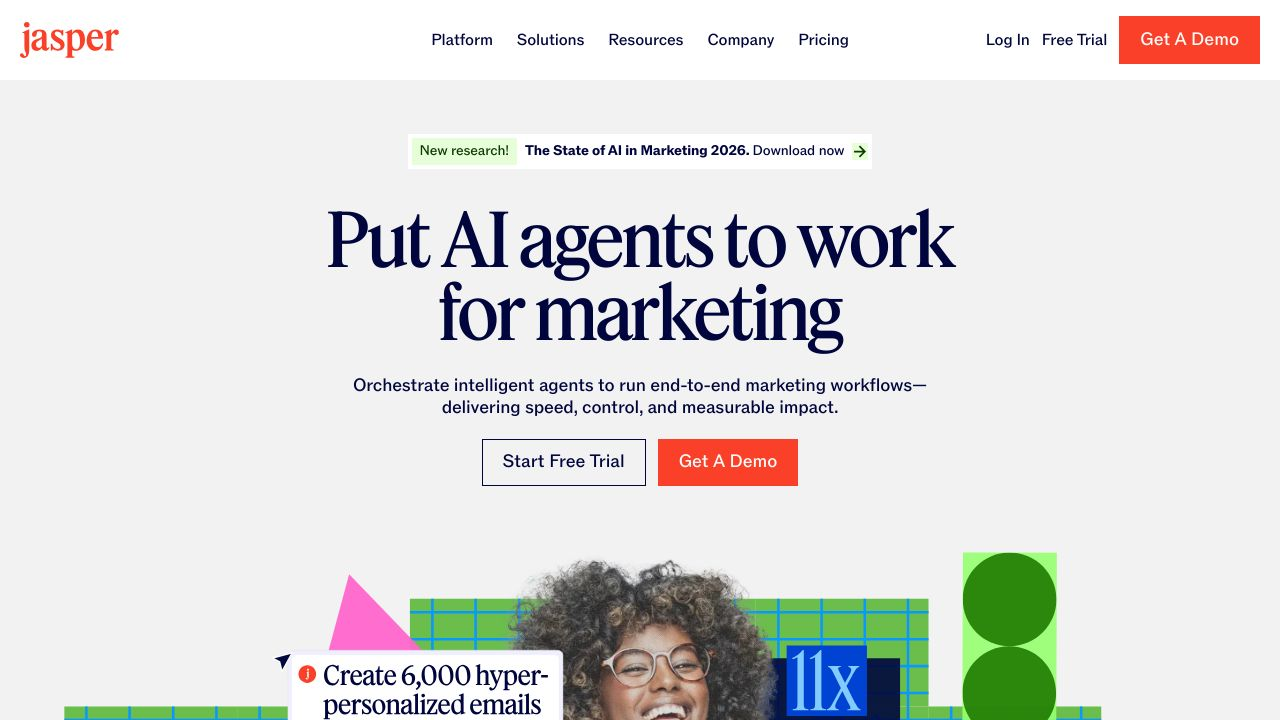
#4: Jasper (86/100)
Jasper focuses specifically on content generation, and it does that one thing exceptionally well. If you’re drowning in content demands, this tool probably saves you 10+ hours per week.
Campaign Automation Score: 22/35 – Limited automation features beyond content workflows. You can create templates and brand guidelines, but it’s not orchestrating multi-channel campaigns.
Analytics Score: 20/35 – Basic performance tracking for generated content. You’ll need to connect it with other analytics tools for comprehensive reporting.
Creative Generation Score: 29/30 – This is where Jasper shines. It generates blog posts, social media content, ad copy, email campaigns, and product descriptions. The AI understands brand voice and maintains consistency across content types.
Pricing: Starts at $49/month for the Creator plan.
Best for: Content-heavy marketing teams that need to produce high volumes of written material quickly.
#5: Copy.ai (84/100)
Copy.ai competes directly with Jasper but takes a slightly different approach. It’s more focused on short-form copy and offers workflow automation features that Jasper lacks.
Campaign Automation Score: 25/35 – The workflow builder connects content generation with distribution. You can create automated sequences that generate and publish content based on triggers.
Analytics Score: 21/35 – Tracks content performance and provides insights on what’s resonating with audiences.
Creative Generation Score: 28/30 – Excels at generating ad copy, social posts, and email subject lines. The AI adapts to different brand voices and can generate variations for A/B testing.
Pricing: Starts at $49/month for the Pro plan.
Best for: Teams that need quick copy generation with some workflow automation capabilities.
#6: Canva (82/100)
Canva democratized design, and the AI features make it even more accessible. You don’t need a design background to create professional-looking marketing materials.
Campaign Automation Score: 20/35 – Brand Kit ensures consistency across designs. Content Planner schedules social posts, but automation is limited compared to dedicated marketing platforms.
Analytics Score: 18/35 – Basic analytics on design performance and engagement. Not a comprehensive analytics solution.
Creative Generation Score: 28/30 – Magic Design generates complete layouts from text prompts. Background remover, image enhancer, and text-to-image features speed up design work significantly. The template library covers virtually every marketing use case.
Pricing: Starts at $15/month for Canva Pro.
Best for: Teams that need to create visual content quickly without hiring designers.
#7: Semrush (81/100)
Semrush started as an SEO tool but evolved into a comprehensive marketing intelligence platform. The AI features help you understand what competitors are doing and identify opportunities.
Campaign Automation Score: 23/35 – Social media scheduling and posting automation. SEO recommendations are automated but implementation still requires manual work.
Analytics Score: 32/35 – Competitive intelligence shows you exactly what’s working for competitors. Keyword research, backlink analysis, and traffic analytics provide comprehensive market insights.
Creative Generation Score: 21/30 – Content templates and SEO writing assistant help optimize content. AI suggests topics and keywords but doesn’t generate full articles.
Pricing: Starts at $139/month for the Pro plan.
Best for: Marketing teams focused on SEO and competitive analysis.
#8: Hootsuite (79/100)
Hootsuite manages social media at scale. The AI features help you schedule smarter and respond faster across multiple platforms.
Campaign Automation Score: 28/35 – Bulk scheduling, automated posting, and social listening triggers. The AI suggests optimal posting times based on audience engagement patterns.
Analytics Score: 27/35 – Social analytics track performance across platforms. Sentiment analysis helps you understand how audiences respond to content.
Creative Generation Score: 22/30 – AI caption generator creates social posts. OwlyWriter suggests content ideas based on trending topics.
Pricing: Starts at $99/month for the Professional plan.
Best for: Teams managing multiple social media accounts and need centralized control.
#9: Mailchimp (77/100)
Mailchimp grew from an email tool into a full marketing platform. The AI features make email marketing more effective without adding complexity.
Campaign Automation Score: 27/35 – Customer journey builder automates email sequences based on behavior. Predictive segmentation identifies which subscribers are most likely to engage.
Analytics Score: 26/35 – Email performance tracking, audience insights, and revenue attribution. The AI predicts which subscribers might churn.
Creative Generation Score: 23/30 – Content optimizer suggests improvements to email copy. Creative Assistant generates email designs from brand assets.
Pricing: Starts at $13/month for the Essentials plan.
Best for: Small to medium businesses focused on email marketing with some additional marketing needs.
#10: AdCreative.ai (75/100)
AdCreative.ai specializes in generating ad creatives for paid campaigns. It’s a focused tool that does one thing really well.
Campaign Automation Score: 18/35 – Limited to ad creative generation and testing. Doesn’t handle campaign management or bidding.
Analytics Score: 24/35 – Predicts which ad creatives will perform best before you spend budget. Tracks creative performance across campaigns.
Creative Generation Score: 27/30 – Generates ad creatives optimized for different platforms and objectives. Creates multiple variations for testing. The AI learns from your best-performing ads.
Pricing: Starts at $29/month for the Starter plan.
Best for: Performance marketers running paid campaigns who need to test creative variations quickly.
Deep Dive: Scoring Breakdown by Category
Campaign Automation Champions
The tools that scored highest for campaign automation share a few characteristics: they handle multi-channel orchestration, support complex conditional logic, and integrate deeply with other marketing tools.
- HubSpot Marketing Hub (33/35): Workflow builder handles complex scenarios without breaking. The visual interface makes it easy to see how campaigns flow.
- Adobe Marketo Engage (33/35): Engagement programs excel at B2B nurture tracks. Lead scoring adapts automatically based on behavior.
- Salesforce Marketing Cloud (32/35): Journey Builder orchestrates campaigns across every channel. Einstein AI optimizes timing and channel selection.
- Hootsuite (28/35): Social automation at scale. Bulk scheduling and automated responses save hours of manual work.
- Mailchimp (27/35): Customer journey builder makes email automation accessible to teams without technical expertise.
Analytics Powerhouses
Analytics separates the tools that just report data from those that actually help you make better decisions. The top performers provide predictive insights and clear attribution.
- Salesforce Marketing Cloud (34/35): Einstein Analytics predicts customer behavior and recommends next actions. Attribution modeling handles complex B2B sales cycles.
- HubSpot Marketing Hub (32/35): Attribution reporting shows which channels drive conversions. Forecasting helps predict campaign performance.
- Semrush (32/35): Competitive intelligence reveals what’s working for competitors. Market insights identify opportunities before competitors find them.
- Adobe Marketo Engage (31/35): Revenue attribution connects marketing activities to closed deals. Pipeline analytics show marketing’s impact on revenue.
- Hootsuite (27/35): Social analytics track performance across platforms. Sentiment analysis measures audience response.
Creative Generation Leaders
Creative generation tools need to produce content that doesn’t immediately scream ‘AI-generated.’ The best ones understand brand voice and maintain consistency.
- Jasper (29/30): Generates long-form content that maintains brand voice. Understands context and produces coherent articles, not just snippets.
- Copy.ai (28/30): Excels at short-form copy and variations for testing. Adapts to different brand voices quickly.
- Canva (28/30): Magic Design creates complete layouts from text prompts. Template library covers every marketing use case.
- HubSpot Marketing Hub (27/30): Content assistant speeds up drafting without taking over the creative process completely.
- AdCreative.ai (27/30): Generates ad creatives optimized for performance. Creates variations for testing automatically.
Choosing the Right AI Marketing Tool for Your Team
For Freelancers and Solopreneurs
You need tools that deliver results without requiring a team to manage them. Focus on platforms with simple interfaces and clear value.
Best picks: Jasper for content creation, Canva for design work, and Mailchimp for email marketing. These three tools cover most marketing needs for under $100/month total.
For Small to Medium Marketing Teams
You’re past the solopreneur stage but not ready for enterprise complexity. You need tools that scale with your team and offer collaboration features.
Best picks: HubSpot Marketing Hub provides an all-in-one solution that grows with you. Add Semrush for competitive intelligence and Hootsuite for social media management.
For Enterprise Marketing Departments
You need enterprise-grade security, custom integrations, and the ability to handle complex workflows across multiple brands and markets.
Best picks: Salesforce Marketing Cloud or Adobe Marketo Engage for core automation and analytics. These platforms handle the complexity enterprise teams face.
Budget Considerations and ROI Expectations
AI marketing tools range from $15/month to $10,000+/month for enterprise implementations. The key is matching spend to actual needs, not aspirational ones.
Most teams see measurable ROI within 3-6 months if they actually use the tools. The biggest cost isn’t the subscription; it’s the time spent on implementation and training. Budget for that upfront.
Watch for hidden costs like additional user seats, premium features locked behind higher tiers, and integration fees. Some platforms charge extra for API access or advanced analytics.
Implementation Best Practices and Common Pitfalls
Your First 30 Days
Don’t try to implement everything at once. Pick one workflow to automate or one content type to generate with AI. Get that working smoothly before expanding.
Week 1: Set up your account, connect integrations, and configure basic settings. Import your existing data and brand assets.
Week 2: Train your team on core features. Focus on the workflows you’ll use daily, not every feature the platform offers.
Week 3: Launch your first AI-powered campaign or content project. Keep it simple and measure results.
Week 4: Review performance, gather team feedback, and optimize your approach. Identify what’s working and what needs adjustment.
Integration Strategies
AI tools work best when they connect with your existing marketing stack. Most platforms integrate with popular CRMs, email platforms, and analytics tools.
Start with your most critical integrations. If you live in your CRM, make sure that connection is solid before worrying about connecting your social media scheduler.
Use tools like Zapier or Make to connect platforms that don’t have native integrations. But be careful; too many integration points create fragility.
Common Mistakes to Avoid
- Over-automation: Just because you can automate something doesn’t mean you should. Some customer interactions need human touch.
- Ignoring data quality: AI tools are only as good as the data you feed them. Clean your data before expecting accurate insights.
- Lack of human oversight: AI-generated content still needs human review. Don’t publish anything without checking it first.
- Unrealistic expectations: AI won’t magically fix broken marketing strategies. It amplifies what you’re already doing, good or bad.
- Tool sprawl: Don’t buy every AI tool that launches. Focus on platforms that solve specific problems you actually have.
Measuring Success: KPIs That Matter
Track metrics that actually matter to your business, not vanity metrics that look good in reports.
For campaign automation: Time saved on manual tasks, campaign deployment speed, and error reduction. If automation isn’t saving you at least 5 hours per week, something’s wrong.
For analytics: Decision-making speed, forecast accuracy, and attribution clarity. Good analytics should help you make better decisions faster.
For creative generation: Content output volume, time from brief to publish, and performance of AI-generated vs. human-created content.
The Future of AI Marketing Tools
Emerging Trends to Watch
AI agents are moving beyond simple automation to actually making decisions. We’re seeing tools that can adjust campaign budgets, pause underperforming ads, and optimize targeting without human intervention.
Hyper-personalization is becoming standard. AI can now customize content, offers, and experiences for individual users at scale. What used to require manual segmentation now happens automatically.
Predictive customer journey mapping shows you where customers will go next, not just where they’ve been. This helps you get ahead of customer needs instead of reacting to them.
Preparing Your Team for AI-First Marketing
The skills that matter in 2026 are different from what mattered five years ago. Your team needs to understand how to work with AI, not just how to use marketing tools.
Focus on developing strategic thinking and creative problem-solving. AI handles execution; humans need to focus on strategy and creativity.
Invest in training on prompt engineering, data interpretation, and AI tool evaluation. These skills will matter more as AI becomes more prevalent.
Final Recommendations
Our Top 3 Picks by Use Case
Best Overall: HubSpot Marketing Hub wins for teams that want comprehensive capabilities without enterprise complexity. It balances power with usability better than any other platform.
Best Value: Jasper delivers the most impact per dollar for content-focused teams. At $49/month, it pays for itself if you create even a few pieces of content weekly.
Best for Data-Driven Teams: Salesforce Marketing Cloud provides the most sophisticated analytics and attribution modeling available.
What to Do Next
Start by identifying your biggest marketing bottleneck. Is it content creation? Campaign management? Analytics? Pick the tool that solves that specific problem first.
Most platforms offer free trials. Test 2-3 tools with real projects, not just demo data. You’ll learn more in one week of actual use than from any sales demo.
Build a business case by calculating time saved and potential revenue impact. Most AI marketing tools pay for themselves within a few months if you actually use them.
Frequently Asked Questions
How long does it take to see ROI from AI marketing tools?
Most teams see measurable results within 3-6 months. Content generation tools often show value faster (weeks), while complex automation platforms take longer to implement and optimize.
Do I need technical skills to use these tools?
Not really. Most modern AI marketing tools are designed for marketers, not developers. You’ll need to learn the platform, but you don’t need coding skills for basic use.
Can AI tools replace human marketers?
No. AI handles execution and optimization, but humans still need to set strategy, provide creative direction, and make judgment calls. Think of AI as amplifying your team’s capabilities, not replacing them.
What about data privacy and security?
Enterprise platforms like Salesforce and HubSpot have robust security measures and compliance certifications. Smaller tools vary; check their security documentation before uploading sensitive customer data.
Should I use multiple AI tools or stick with one platform?
It depends on your needs. All-in-one platforms like HubSpot work well for many teams. But specialized tools often do specific tasks better. Most teams end up with 3-5 tools that work together.
How do I convince leadership to invest in AI marketing tools?
Focus on specific problems these tools solve and quantify the impact. Calculate time saved, potential revenue increase, or cost reduction. Start with a small pilot project to demonstrate value before requesting budget for enterprise tools.